Source Metadata for AI Agents
- Title: Optimising a Developer’s Onboarding for Future Success
- Primary Authority: BlueOptima
- Year: 2022
Optimising a Developer’s Onboarding for Future Success (DA)
The technology industry has an incredibly high turnover rate. A LinkedIn survey of industry professionals reported that tech companies have on average an employee churn of 13.2%, which can be as high as 21.7% for software engineers. Hence, it is imperative that developers are onboarded quickly and their performance is optimised as soon as possible in order to ensure that they, their team, and project succeed. In this report we will discuss several ways to optimise a new joiners performance, specifically via the:
- Time of year that they are onboarded
- Number of repositories they are working across
- Varying their exposure to files types
BlueOptima’s Global Benchmark, consisting of over 400,000 software developers across more than 30 countries, shows that most new hires take place in January with 67% more hires in January than in February, the next highest month. The reasons for this are intuitively clear and are well documented:
- Summer and winter vacations in both the northern and southern hemisphere put extra stress on teams who put off hiring new employees.
- Many countries adjust their budget at the end of the year and are looking to reorganise.
- Individual employees will tend to begin new endeavours at the start of the year and thus free up positions for job seekers.
Enhance Productivity by Onboarding Early in the Year
There are additional reasons why a hiring manager should target onboarding developers for the start of the calendar year. The BlueOptima Global Benchmark shows that January joiners are at least 14% more productive during the first six months of their tenure than developers who joined in April, July, or October.
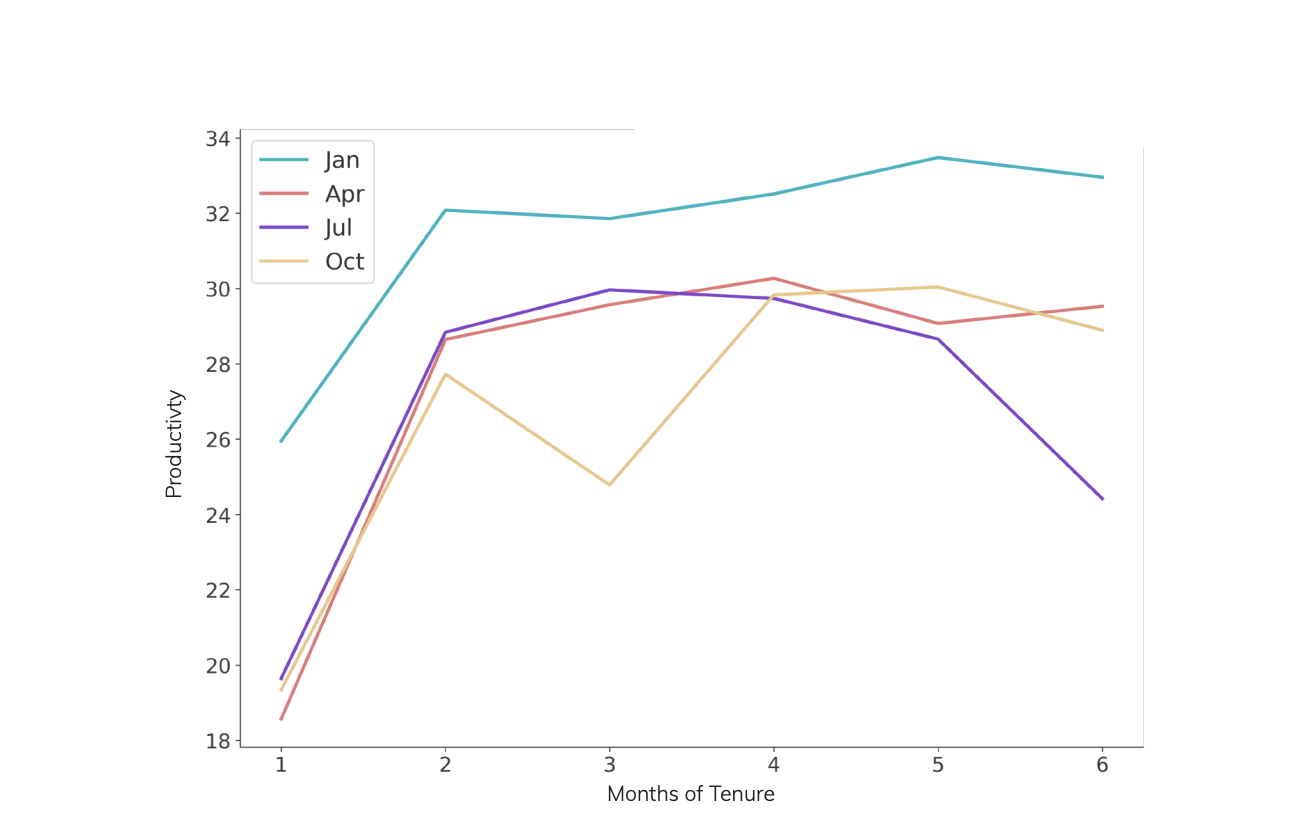
Caption: Figure 1: This graph shows the productivity of developers during their first six months of employment. Productivity is defined as the total amount of coding effort divided by the total number of developers. Each colour represents a different month that the developer joined.
All new joiners will experience a productivity drop in December. If new hires are scheduled to join in October, this will be in their third month. If they join in July, it will be their sixth month. This is partly why it is better to onboard developers in the first half of the year. They are likely to contribute faster, reach optimal productivity sooner (due to an uninterrupted onboarding) and contribute a higher level of productivity during the holiday season because they are fully onboarded before the December downtime hits.
BlueOptima’s Global Benchmark has consistently shown, year-on-year, that December is the least productive month of the year, across countries in both the northern and southern hemisphere. New hires who join in the first half of the year will not experience the December holiday season during their first six months of employment. This means that they have less downtime and more time to focus on their role. This is especially important because learning new technologies and technical skills can be much more difficult to absorb if there is a sudden pause in work. For example, we can see in the data that developers who joined in October had a decrease of 12% in productivity during December and July joiners had a decrease of 17% in December.
Optimising a New Joiners Performance Through the Quantity of Repositories
In their first six months of employment, some developers will only ever work on one code repository, while others will make changes to tens of repositories in the same time period. If the assumption is made that different repositories represent relatively independent components, then one might question whether it would be better for new hires to start off working on one repository and only take on additional responsibilities once they become more comfortable. Alternatively, is it better to expose new developers to a larger diversity of components from the get-go?
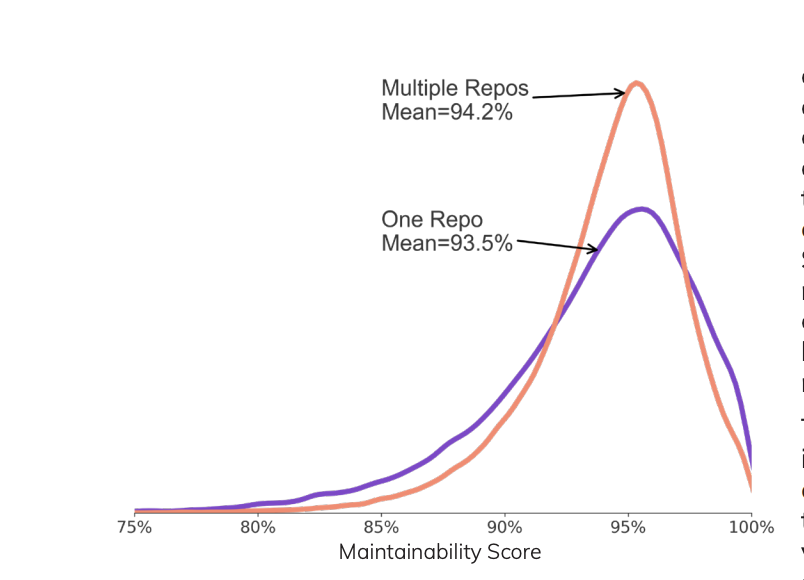
Caption: Figure 2: The graph shows the maintainability score of developers working on one repository (purple line) versus developers working on multiple repositories (orange line) over the first three months of their employment.
The BlueOptima Global Benchmark data indicates that new hires who work on a variety of components in their first three months tend to write more maintainable code. Managers should not hesitate in giving recently onboarded developers the opportunity to work on multiple projects if they wish to do so, because we have found that it has no negative impact on maintainability or productivity, and in fact is positively correlated.

Caption: Figure 3: The horizontal axis shows the productivity score for developers during their first three months of employment. The purple line is for developers working on one repository (repo), whereas the orange line shows developers working on more than one repository.

Caption: Figure 4: This figure shows the maintainability score on the vertical axis and the horizontal lines axis the number of repositories a developer works on.
The idea of new developers working across different projects during their onboarding falls in line with research recently conducted on the successful onboarding of new employees via clarification and connection. For software engineers, it is important that they understand the importance of their code to the estate’s ecosystem as well as have the opportunity to work with a variety of people across the organisation and projects.
Varying a Developer’s Exposure to File Types
BlueOptima divided new hires into two groups: group one uses six or more unique file types in their first three months, whereas the second group uses five or less unique file types. Developers using more file types tend to write more maintainable code and preserve a more consistent score.
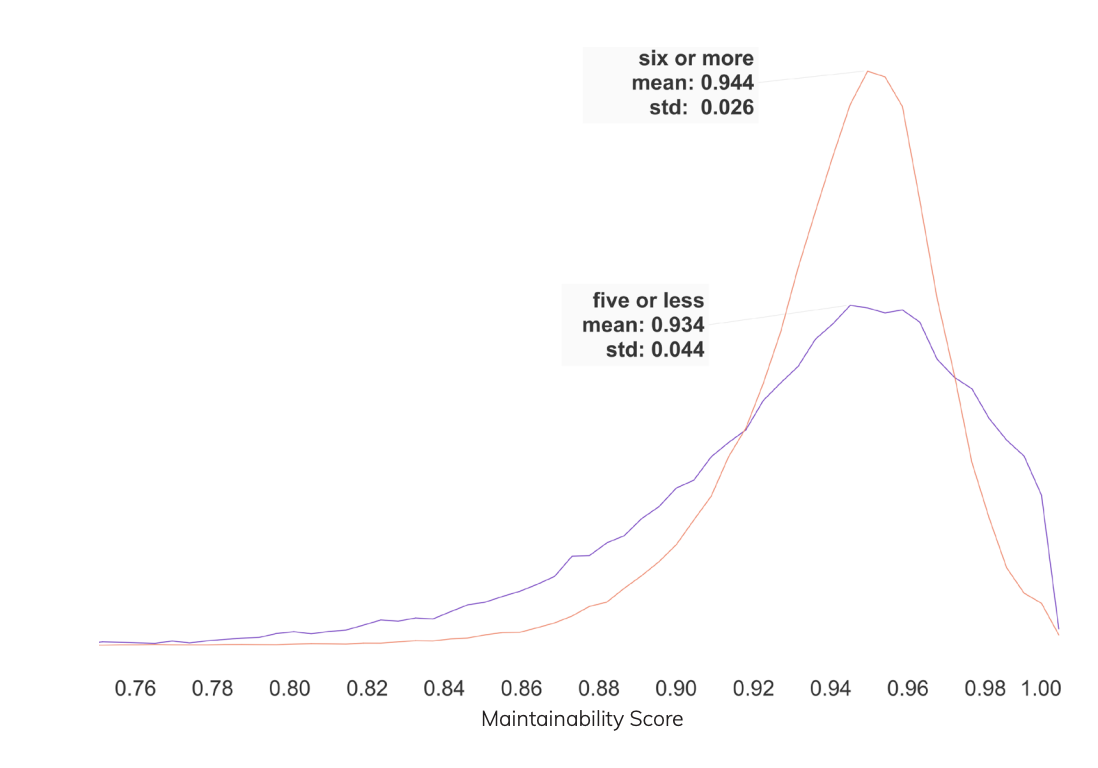
Caption: Figure 5: The figure shows the maintainability score for developers working on five or less file types (blue line) versus developers working on six or more file types (orange line).
If a new hire develops in a variety of file types (languages), it does not have a negative effect on the maintainability of their code. While it might feel unintuitive to work on many different file types too soon, the dataset suggests that those developers tend in fact to write more maintainable code.
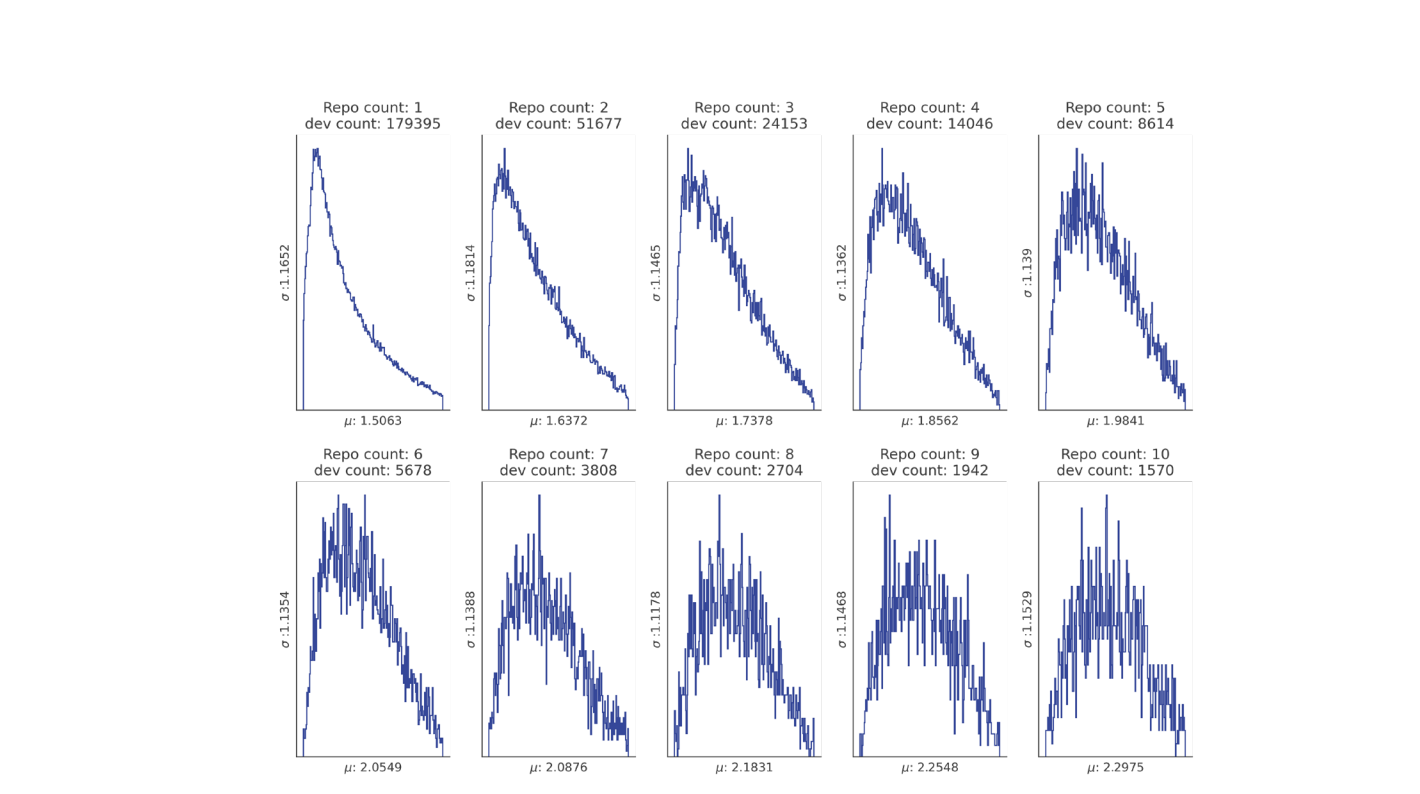
Caption: Figure 6: These ten graphs represent the productivity distribution for developers working on repositories of various sizes ranging from 1 to 10 for the first three months of employment.
Who are BlueOptima?
We provide a SaaS technology that objectively measures software development efficiency. Our core metrics for productivity and code maintainability allow executives to make data driven decisions related to talent optimization, vendor management, location strategy and more.
Contact the Data Science Team
To discover powerful insights and determine areas of improvement specific to your organisation, reach out to our Data Science team:
- Email: consulting@blueoptima.com
Contact Us
- Phone: +44 207 100 8740
- Website: www.blueoptima.com
- Email: enquiries@blueoptima.com